In the era of digital sales and data-driven sales strategies, most sales teams find themselves at a peculiar crossroads. They're equipped with sales tools and technologies that can, quite literally, put the world at their fingertips. Yet, they grapple with a fundamental gap, the gap between sales data richness and information richness.
Consider the capabilities at the disposal of today's sellers:
- Access to anyone's phone number with a single click.
- The ability to unearth the most pertinent content effortlessly.
- The power to forecast deals, sans the endless clicking and scrolling.
Despite these advancements, there remains a chasm, a significant lapse in truly invaluable insights:
- Who among the customers are genuinely satisfied?
- Which individuals truly champion and advocate for their products?
- Who stands as influential admins within the product user base?

This gap manifests most critically at the beginning of the sales process. Sales representatives, in the absence of this deeper understanding, navigate blindly towards target accounts. The result? Extended sales cycles and diminished win rates.
But, let's pivot, imagine a scenario where your sales team is no longer in the dark. Armed with pivotal 'information', they can revolutionize their approach:
- Targeting lookalike accounts and buyers becomes a sales strategy grounded in insight rather than a "spray and pray" tactic.
- Engaging past champions and power users within target accounts bridges connections more seamlessly.
- Leveraging champions and product user networks illuminates warmer, more promising paths to target accounts.
The proof is in the numbers: Customer-referred pipelines can close a staggering 5-8 times faster than their outbound counterparts.
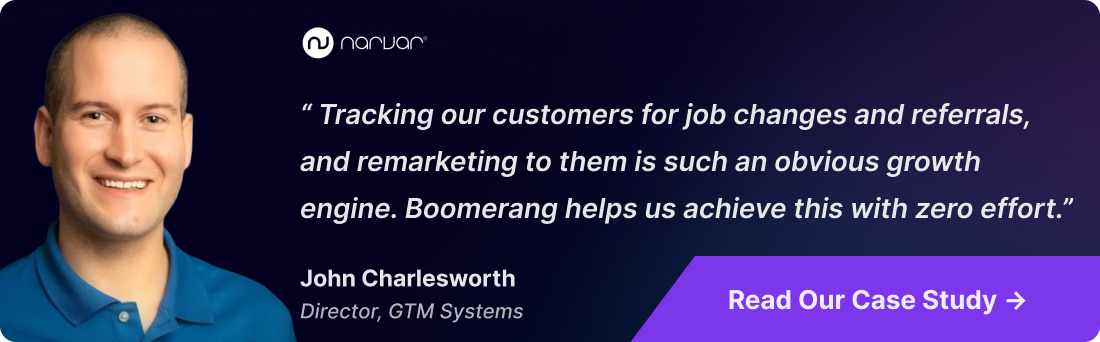
Why? Because trust translates into speed.
When your sales strategy is anchored in meaningful relationships and genuine endorsements, every interaction becomes more impactful. Trust, the cornerstone of successful sales strategies, is pre-established in these scenarios, accelerating the process manifold.
The Real Question: Are You Maximizing Your Customer Networks?
In the quest for quarter-end targets and KPI achievements, the strategic value of customer networks often gets overlooked. The focus is predominantly on broad-reaching, impersonal sales tactics. The result is a painted landscape where sales opportunities are missed, and potential warm relationships remain uncultivated.
It’s time to shift perspectives and strategies:
- Invest in understanding your customer base deeper than the surface-level data points. Identify the happy customers, the champions, the influencers. Utilize customer contact tracking to gain valuable customer information.
- Adopt tools and technologies that not only provide sales data but translate it into actionable insights. Harness AI sales tools, machine learning, and advanced analytics to uncover the hidden layers of your customer network.
- Foster a culture of relationship-building within your sales teams. Encourage them to not just chase leads but to build connections and genuinely understand the needs and dynamics of their target accounts.
In essence, the path to sales success is intricately linked with the depth of your customer relationships. As you navigate the complex landscape of modern digital sales, let the power of your customer network be your guiding light.
The question remains. How will you tap into this goldmine?
Remember, the approach isn't about exploiting relationships but rather nurturing and leveraging genuine connections for mutual benefit. A strategic shift towards insightful, relationship-driven selling can redefine your sales success story.
Embrace a data-driven sales strategy, harness the power of your customer network, and watch as you generate sales like never before. The future of selling lies in the synergy of AI and sales, empowering your team to build meaningful connections and drive unparalleled results.
Frequently asked questions
What customer information do sales teams usually lack?
They lack insight into their own customer base. Sellers can get phone numbers in one click, find relevant content and forecast deals, yet often cannot answer which customers are genuinely satisfied, which individuals champion the product, and who the influential admins are in the user base. That gap between data richness and information richness hurts most at the start of the sales process.
What happens when reps approach target accounts without customer network insight?
They navigate blindly, which leads to extended sales cycles and diminished win rates. Without knowing who the happy customers, champions and influential users are, reps default to broad, impersonal tactics. Sales opportunities are missed and potential warm relationships stay uncultivated, especially in the push for quarter-end targets and KPI achievements.
How can sales teams use customer networks to reach target accounts?
There are three main ways. Target lookalike accounts and buyers based on insight rather than a spray and pray tactic. Engage past champions and power users who now sit inside target accounts. And leverage champions and product user networks to find warmer, more promising paths into the accounts you want to win. Each approach starts from relationships that already carry trust.
Do customer-referred deals close faster than outbound deals?
Yes. Customer-referred pipelines can close 5-8 times faster than their outbound counterparts. The reason is trust: when a sales approach is anchored in meaningful relationships and genuine endorsements, trust is already established before the first conversation, so every interaction carries more weight and the whole sales process accelerates rather than starting from zero with a skeptical buyer.
How do you start getting more value from your customer network?
Make three shifts. Understand your customer base beyond surface-level data by identifying the happy customers, champions and influencers, using customer contact tracking. Adopt tools that turn sales data into actionable insights, including AI and analytics that reveal hidden layers of your network. And build a relationship-first culture where reps build genuine connections instead of just chasing leads.


.png)